
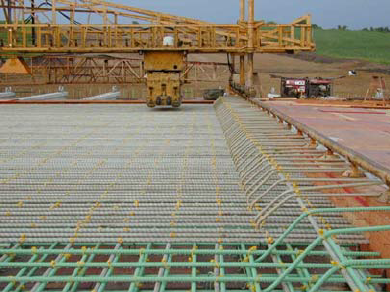
GFRP Rebars

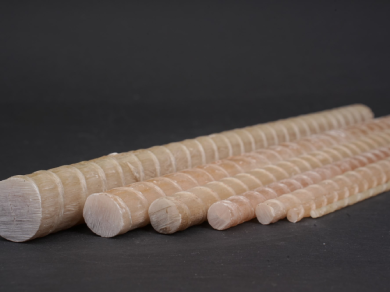
GFRP (Glass Fiber Reinforced Polymer) rebars are an innovative alternative to traditional steel reinforcement, particularly in structures exposed to corrosion and harsh environments. GFRP Rebars have been developed as a non-corrosive solution for reinforcement. They offer superior durability and performance like coastal areaa, chemical industries and water infrastructure.

Specifications:

Properties UOM Tolerance IS 18256: 2023 TSL GFRP Rebar
Glass Content%(+)(-)5>=75>=80
Tensile StrengthMpamin.700-850800-1000
Tranverse ShearTensileMpa>=130135-200 Mpa
Tensile Modulus of ElasticityMpa>=4500045000-55000
Ultimate tensile Strain%>=1.1>=1.1
Glass transition TemperatureoC>=100101-115
Moisture Absorption%min.≤0.25≤0.25

Benefits:

Corrosion Resistance

  • Unlike steel, GFRP does not rust, making it ideal for marine, coastal, and chemically aggressive environments.
  • Increases the lifespan of structures and reduces maintenance costs.

High Strength-to-Weight Ratio

  • GFRP rebars are 25% the weight of steel but provide comparable tensile strength (~600-1200 MPa)..
  • Easier to handle, transport, and install.

Low Carbon Footprint & Sustainable

  • Reduces CO₂ emissions compared to steel production
  • deal for green and eco-friendly construction projects.

Non-Conductive & Non-Magnetic

  • Does not conduct electricity or interfere with electromagnetic waves.
  • Suitable for MRI rooms, power plants, and electronic-sensitive structures.

High Fatigue & Impact Resistance

  • Can withstand cyclic loading better than steel, making it suitable for bridges and road structures.
  • Resistant to sudden shocks and vibrations caused by heavy traffic or seismic activity.

Thermal Expansion Similar to Concrete

  • Reduces the risk of cracks caused by differential thermal expansion, unlike steel which expands more than concrete.
  • Ensures better bond integrity between rebar and concrete over varying temperatures.

Applications:

Infrastructure & Bridges

It is ideal for bridges and flyovers in coastal or snowy regions for corrosion resistance, and also suits deck slabs, retaining walls, and expansion joints for long-term durability.
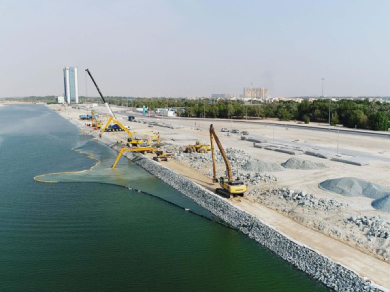
Marine & Coastal Structures

It is ideal for ports, docks, and seawalls where saltwater corrosion is a concern, and also suits offshore platforms and underwater tunnels for durable marine performance.
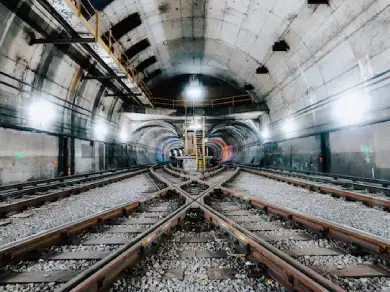
Tunnels & Underground Structures

It is ideal for metro tunnels and railways for its non-magnetic, corrosion-resistant nature, and also used in mines and soil stabilization for lightweight durability underground.

Road & Pavement Construction

It is well-suited for pavements, toll booths, and runways due to its non-conductive nature that prevents radar interference, and is also used in barriers and crash-resistant structures for its high impact strength.
Water Retention & Treatment Plants

It is ideal for substations, nuclear and thermal plants due to its non-conductive, non-magnetic properties, and also suits chemical and pharmaceutical industries where high resistance to acids.
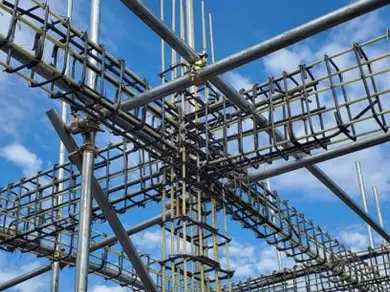
Industrial & Power Plants

It is ideal for electrical substations, nuclear, and thermal power plants due to their non-conductive nature. They also perform well in chemical and pharmaceutical industries where resistance to acidic .

Limitations of GFRP Rebars:

  • Higher initial cost than steel (though long-term savings outweigh this).
  • Lower shear strength than steel, requiring design modifications.
  • Brittle failure mode (unlike ductile steel failure).
  • Limited design codes, though ACI 440, CSA S807, and IS codes are evolving.
Enquiry Now
×

Enquiry Form